Food slideshow ideas that people cook from.
Updated 26 October 2026
Two example slideshows
Wavegrain drew both with its own slide renderer, using free-licence photos. They are examples, not customer posts. Swipe through each one.
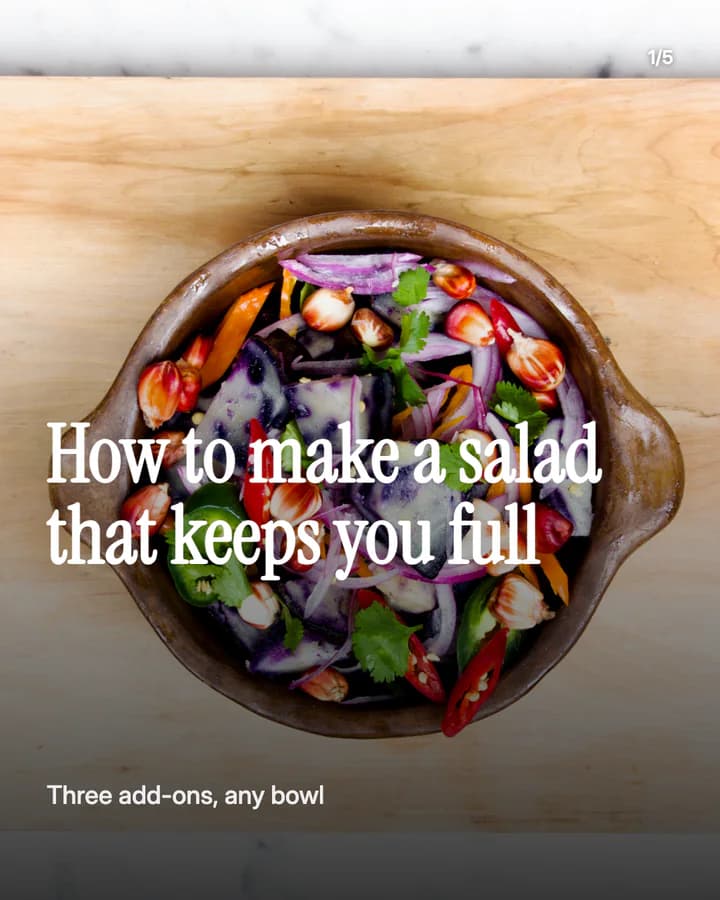
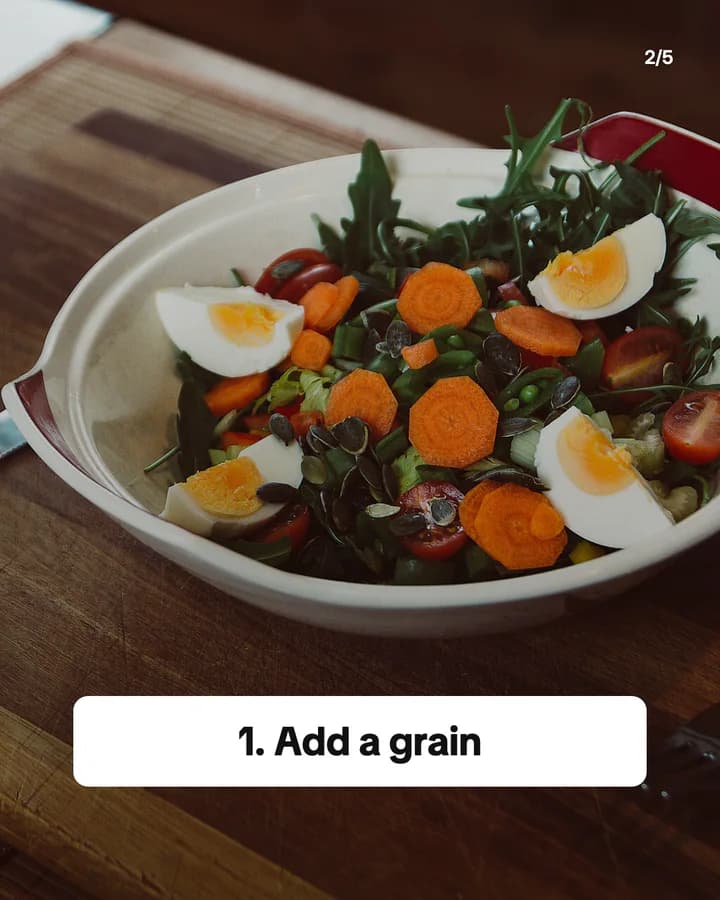
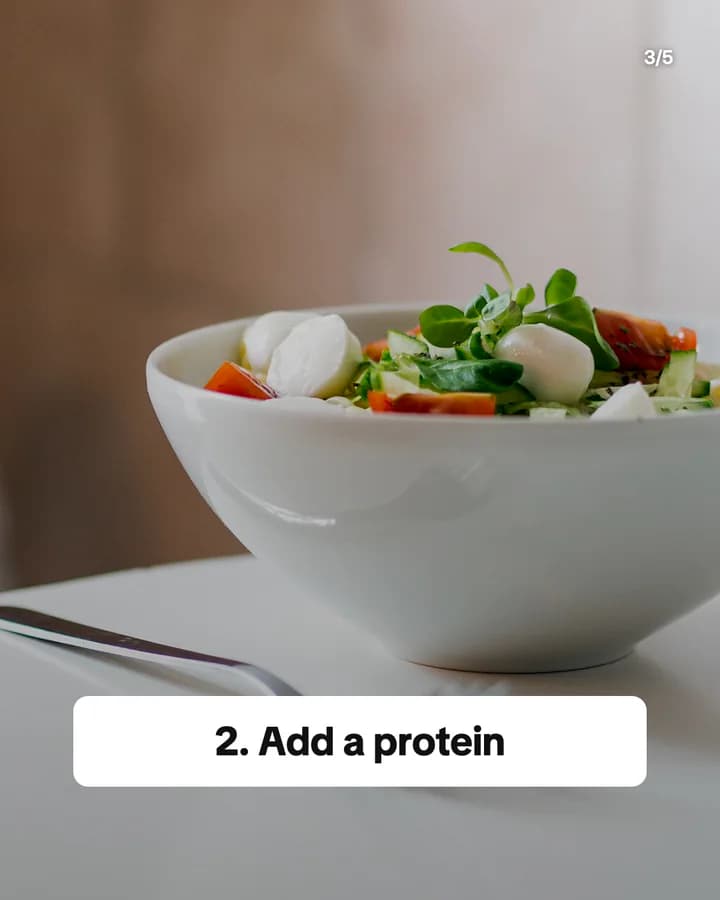
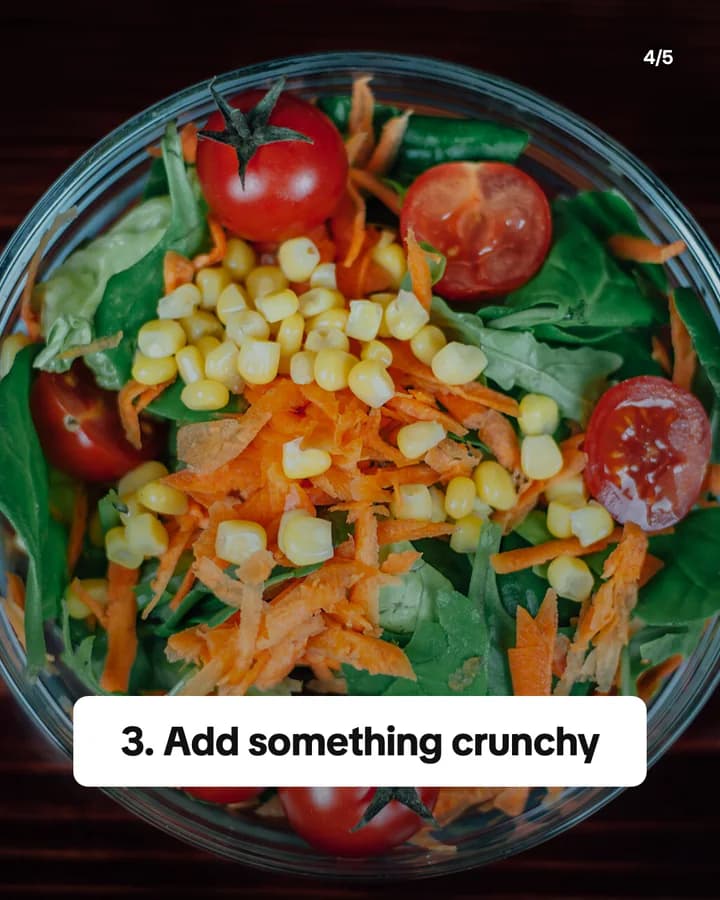
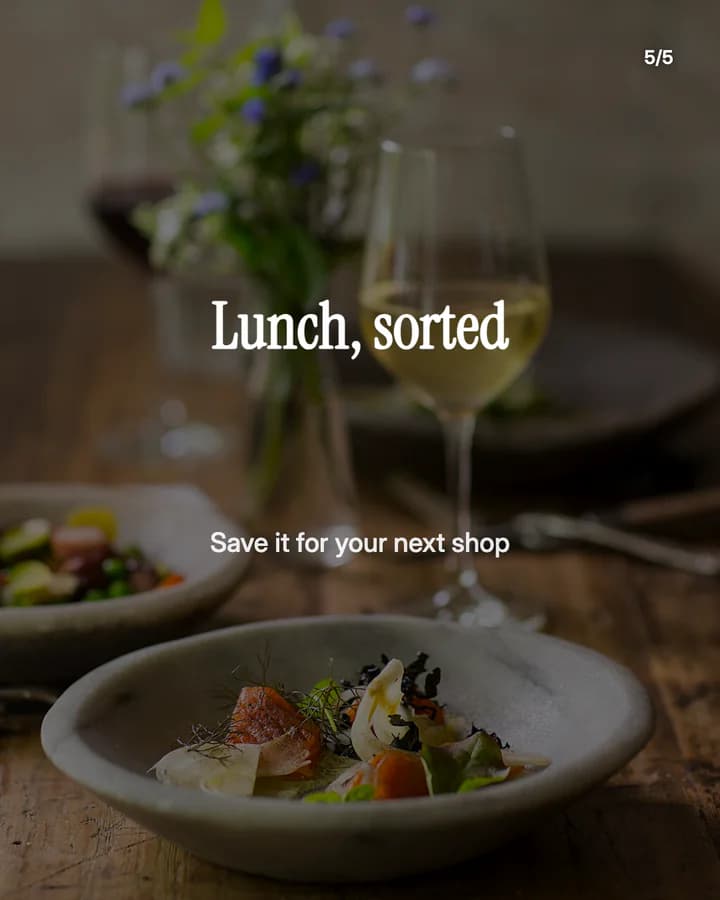
How to make a salad that keeps you full
5 slides · Listicle structure
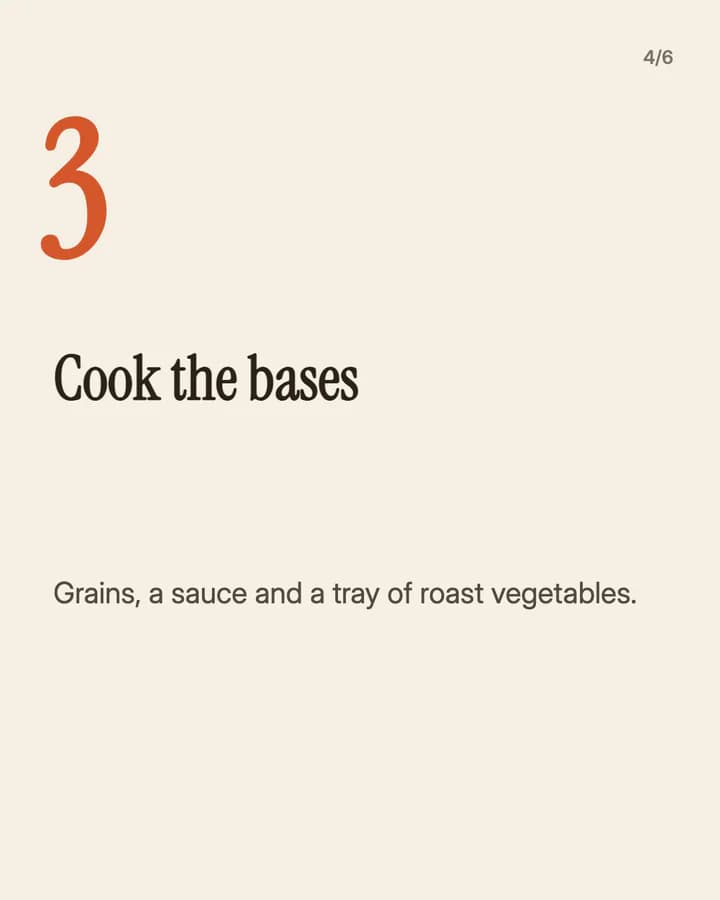
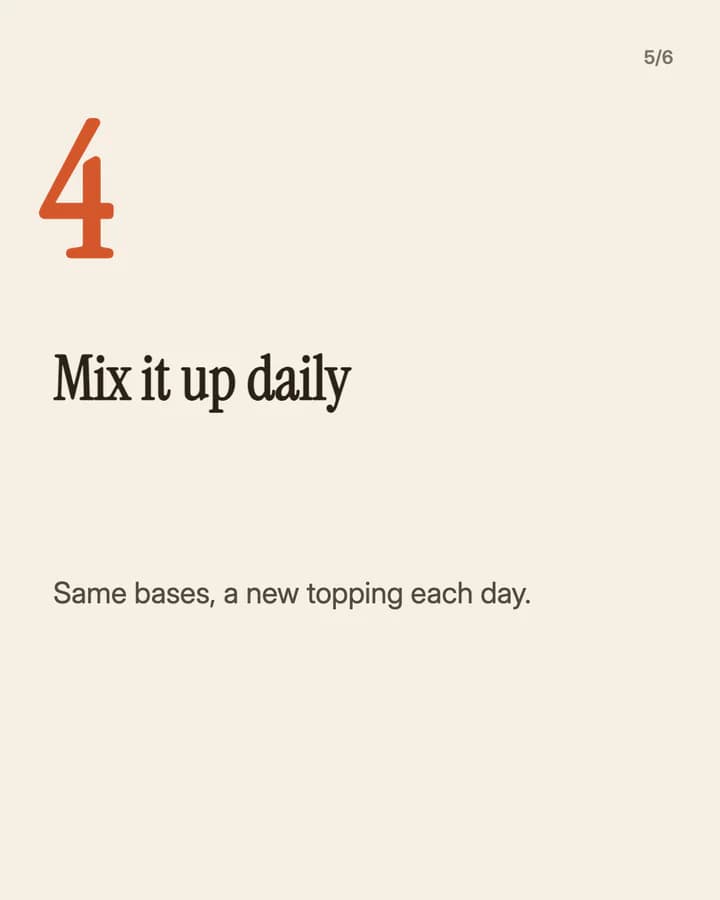
Meal prep in 4 steps
6 slides · Step-by-step explainer look · Educational structure
10 hooks for food slideshows
“How to make a salad that keeps you full”
How-to. It names a common complaint about salads, and the reader wants the fix.
“Meal prep in 4 steps”
Plan. A small number of steps makes a big job look easy to start.
“5 pantry staples I always keep”
Listicle. Readers check the list against their own cupboard.
“Stop rinsing your pasta”
Mistake. A short warning about a common habit makes people want the reason.
“Dinner in 15 minutes with one pan”
Plan. Time and washing up are the two things most cooks want less of.
“What I eat for lunch in a work week”
Routine. People like to see a real week and borrow the parts that fit theirs.
“Fresh pasta vs dried: when to use which”
Comparison. Two close choices side by side answer a question people have in the shop.
“Batch cooking mistakes I made at first”
Story. Your own mistakes sound honest and save the reader the same trouble.
“3 sauces that change a plain bowl”
Listicle. It promises variety from food the reader already has.
“Save this for your next shop”
Save prompt. It tells the reader the post is useful later, at the moment they need it.
Formats that fit
Each format is a look and a post structure you can pick in Wavegrain.
Step-by-step explainer
Educational structure
A recipe or a meal prep plan in order, one step per slide, with amounts and times.
Numbered list
Listicle structure
Three to five add-ons, staples or swaps, one per slide, each with a photo of the food.
Myth vs fact
Educational structure
One kitchen belief per slide, crossed out, with the plain fact under it.
TikTok caption story
Story structure
A dish you got wrong and then right, told as captions over your own cooking photos.
A week of posts
- Monday
- A meal prep plan for the week, to save before the first shop.
- Tuesday
- A quick dinner with one pan, one step per slide.
- Wednesday
- Myth vs fact on one kitchen habit your followers ask about.
- Friday
- A slower weekend recipe, with the ingredients on the second slide.
- Sunday
- A shopping list for next week, built around three shared ingredients.
Rules to watch
- Name the main allergens in a recipe, such as nuts, milk, eggs, gluten or sesame, so readers can check before they cook.
- Keep nutrition claims accurate. Only call a dish high protein or low calorie when the numbers support it, and do not promise health results.
- Use photos you have the rights to: your own, stock photos under their licence, or AI images. If the post is your recipe, show the dish you made, not an AI picture of it.
- If a brand paid for the post or sent you the product, turn on the platform's paid partnership or branded content label.
Questions
What should a food slideshow be about?
Something your followers can cook this week: a short recipe, a meal prep plan, a few add-ons for a plain dish, or a kitchen myth and the fact behind it. One step or one point per slide keeps it easy to follow at the stove.
How many slides should a recipe slideshow have?
Enough for one step per slide: a hook slide with the dish, the ingredients, the steps, and a last slide that tells people what to do next. Most recipes fit in six to ten slides. TikTok photo posts allow up to 35 images.
Can I post food slideshows without showing my face?
Yes. Photos of the ingredients, the pan and the finished plate carry a food post well, and the text does the rest. Both examples on this page show no faces.
Does Wavegrain write the slides for me?
Yes. You give a topic, and Wavegrain writes the hook, the slides and the caption, places your photos or makes AI images, and keeps everything editable before you export it.
Which size should food slideshows be?
1080x1920 (9:16) fills the screen on TikTok. For an Instagram carousel, use 1080x1350 (4:5) or 1080x1440 (3:4). Wavegrain exports all three.